


Best Insulated Casseroles and Hot Pots for Indian Families: What Keeps Food Warm Longer?
- 10 Nov 2026
-
 By Varun Sharma
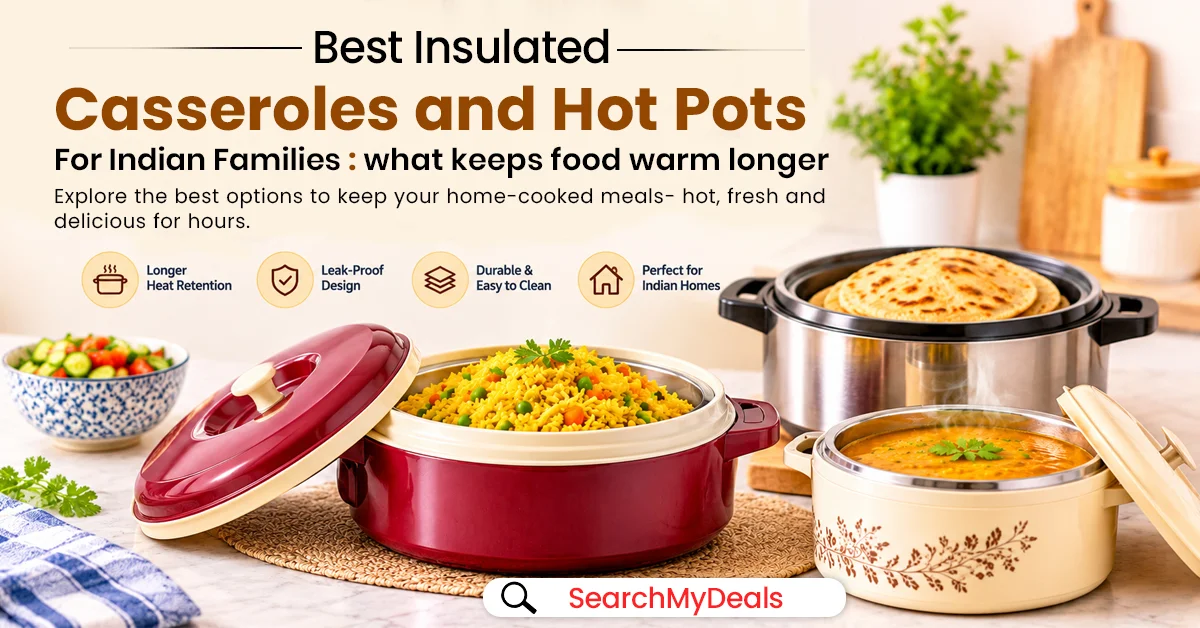
When family members arrive at different times or guests are still chatting long after dinner is ready, keeping food warm becomes a small but familiar kitchen challenge. Rotis can turn stiff, rice loses its serving temperature, and dishes that were prepared together may need to be served over a longer period. This is where a good insulated casserole or hot pot can make mealtimes easier.
But not every casserole performs in the same way. Some are compact containers designed mainly for chapatis, while others have larger capacities for rice, pulao or a family-sized portion of sabzi. There are also multi-piece insulated serving sets that make it easier to place different dishes on the dining table.
If you are looking for the best insulated casserole in India, the right choice depends on how many people you usually serve, what you plan to store and how long the food needs to remain warm. This guide explains the important features and compares ten options available through Amazon.in listings.
1. How Does an Insulated Casserole Keep Food Warm?
An insulated casserole is designed to slow down the loss of heat from cooked food. Unlike a regular steel bowl, it typically uses a double-wall construction, with an insulating layer or air space between the inner and outer walls. Some models use polyurethane (PU) foam insulation, while others use different insulated constructions.
The purpose is simple: reduce the rate at which heat escapes into the surrounding air. A lid adds another important layer of protection. If it fits poorly or is repeatedly opened, warm air escapes and the food cools faster.
A few factors influence actual heat retention:
Insulation quality: A properly insulated double-wall body generally performs better than a thin, single-wall container.
Lid fit: A secure lid helps reduce heat loss from the top. Check whether it sits firmly and is easy to remove.
Food quantity: A reasonably full casserole usually retains warmth better than a large container holding only a small portion.
Starting temperature: Food placed inside while piping hot will generally remain warmer for longer than food that has already cooled.
Opening frequency: Repeatedly lifting the lid releases heat, so serve in portions rather than keeping the lid open.
Manufacturers sometimes advertise a specific number of hours for heat retention. Treat such claims as model-specific rather than a guarantee for every dish or household. The food type, quantity, room temperature and frequency of opening can all change the result.
2. What Should Indian Families Check Before Buying?
A casserole may look attractive on a product page, but its practical value comes down to a few details.
Inner material: stainless steel or plastic?
A stainless steel inner surface is a sensible choice for regular use. It is generally easier to maintain than many porous or easily stained surfaces and is suitable for serving a range of cooked foods. Check the product description for the stated steel grade rather than assuming every stainless steel inner is identical.
Some products have a plastic inner, while others use steel inside and a plastic outer body. Food-contact materials should be clearly specified as food-grade. If the product claims BPA-free construction, verify that claim on the manufacturer or product listing.
For households that regularly serve dal, rice, sabzi and rotis, an inner steel casserole is often a practical everyday option. However, the quality of insulation and lid design still matter; steel alone does not guarantee longer heat retention.
Capacity: choose for the food, not just the family size
Capacity is one of the easiest specifications to overlook. A 1.2-litre casserole may be adequate for a modest serving of rotis or a side dish, but it may feel restrictive when serving rice to several guests.
As a broad starting point:
Under 1 litre: Useful for small portions, chutneys, snacks or a compact roti serving.
1 to 1.5 litres: Suitable for everyday serving in a smaller household or for one side dish.
Around 2 to 2.5 litres: A practical range for many family meals, larger roti stacks or a serving of rice.
3 litres and above: Worth considering for joint families, larger portions and occasions when several guests are expected.
These are planning guidelines, not fixed serving guarantees. Rotis, rice and gravy occupy space differently. If you often host guests, a set with multiple sizes may be more useful than one oversized casserole.
Lid design, handles and serving convenience
A lid should fit securely without requiring excessive force. A loose lid can allow heat to escape; an awkwardly tight lid can make serving inconvenient, particularly when the casserole is full.
Also look for:
Handles or grip points that make a full casserole easier to carry.
A stable base that does not wobble on the dining table.
A lid that can be lifted without touching hot food.
A shape that allows a serving spoon to reach the bottom and corners.
A design that can be stored without taking up unnecessary cabinet space.
A twist-lock or press-fit design may be useful for carrying food, but do not assume that every casserole is leakproof. Check the product's stated use and avoid transporting liquids in a container unless the manufacturer confirms it is suitable.
Cleaning and daily maintenance
A casserole is used repeatedly, so cleaning should not become a chore. A wide opening makes it easier to reach the bottom and remove food residue. Stainless steel interiors are generally straightforward to clean with mild dishwashing liquid and a soft sponge.
Avoid immersing the entire insulated body in water unless the manufacturer says it is safe to do so. Water entering the insulation cavity can damage the product. Do not use abrasive scrubbers on decorative exteriors, and check whether the lid can be dismantled for cleaning.
Most importantly, an insulated casserole is a serving and holding container, not a cooking vessel. Do not place it directly on a gas stove, induction cooktop or in an oven unless the product is explicitly designed for that use.
3. Ten Insulated Casseroles and Hot Pots to Compare
The following shortlist includes compact hot pots, larger inner-steel casseroles and options for serving multiple dishes. Product names and specifications can vary by size, colour and listing variant, so check the exact Amazon selection before ordering.
1. Milton Galaxia Stainless Steel Casserole
A branded option to consider if you prefer a stainless steel inner and a conventional insulated serving format. Check the selected Galaxia variant carefully: the range includes different sizes, and the capacity you choose should match whether you plan to serve rotis, rice or a side dish.

2. Asian Thermoware Casserole
An option for shoppers comparing more affordable hot pots. Before buying, confirm the inner material, stated capacity and insulation details on the exact listing. It is worth comparing these specifications against branded alternatives rather than choosing only by appearance.

3. Trueware Eternity Inner Steel Insulated Casserole
This listing is positioned as an inner-steel thermoware casserole. It may suit households looking for a medium-to-large serving container, but check the exact capacity and the manufacturer's cleaning instructions before purchase.

4. Cello Sapphire Insulated Inner Steel Casserole – 1,250 ml listing
A compact option for everyday serving. The 1,250 ml listing is more appropriate for a moderate quantity than for a large family gathering. Consider it for rotis or a side dish, and look at a larger model if you regularly serve several guests.

5. MGHY Double-Walled Stainless Steel Casserole – 2.45-litre listing
A larger-capacity listing that may be worth comparing for family meals. Its stated 2.45-litre size gives more room than compact hot pots, but check the exact inner construction, lid fit and seller information before making a decision.
6. Milton Valenza Stainless Steel Casserole
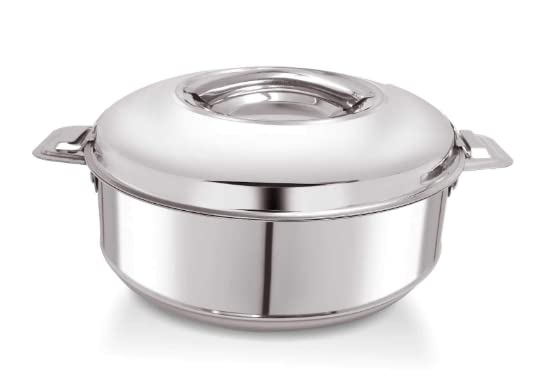
A Milton option to compare when browsing traditional insulated casserole designs. Confirm the selected size and whether the particular listing specifies an inner stainless steel surface and insulation type. Do not assume all Valenza variants have identical specifications.

7. Pristella Steelcraft Insulated Stainless Steel Casserole
A larger hot-case style listing to consider for serving food at home or carrying a prepared dish. Review the product dimensions, capacity, handle design and lid mechanism. If you intend to carry gravy or liquid dishes, verify whether the seller describes the product as suitable for leak-resistant transport.
8. Stainless Steel Insulated Casserole – 2-litre listing
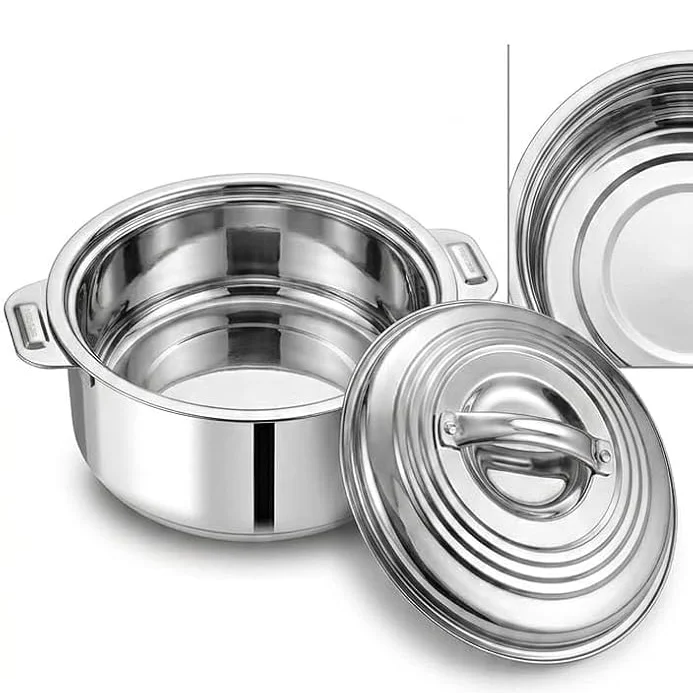
A generic 2-litre option can be useful when capacity is the main consideration. However, generic listings deserve closer scrutiny: check the seller's material description, product photographs, insulation details and return policy before ordering.

9. Dhara Stainless Steel Thermoware Casserole – 2,500 ml listing
A larger-capacity option for households that prepare food in bigger quantities. The listing describes a 2,500 ml insulated hot pot. Check the exact lid and inner-wall details, and compare its dimensions with your available storage space. CHECK PRICES ON AMAZON
10. Uninox Exxaro Stainless Steel Thermoware Casserole – 2,000 ml listing
A 2-litre option for shoppers looking for a mid-to-large serving container. Check the listing for the exact construction, stated insulation and care instructions. It is worth comparing with other 2-litre products on price, material details and seller support.

Product availability, prices, colours and capacities can change. The linked product pages should be treated as the current shopping references; confirm the selected variant before placing an order.
4. Which Casserole Is Best for Hosting Guests?
For a family that hosts guests regularly, buying one very large casserole is not always the most convenient solution. Different dishes need different serving quantities, and a large container may be unnecessarily bulky for everyday use.
A more flexible approach is to choose two or three sizes based on the food you serve most often.
For rotis and parathas: A medium or large casserole with an easy-to-open lid is useful. Avoid compressing a large stack so tightly that serving becomes difficult.
For rice, pulao and biryani: Look for a wider opening and enough capacity to serve the expected number of people. A broad bowl is often easier to scoop from than a narrow, deep container.
For dal and gravies: Check whether the lid and body are designed to handle liquid foods. A serving casserole should not automatically be treated as a leakproof travel container.
For sabzi and side dishes: Smaller insulated serving bowls can help keep individual dishes separate and reduce repeated opening of one large container.
For a buffet-style meal: A graduated set of insulated serving bowls gives you flexibility. You can use the smaller pieces for accompaniments and the larger one for a main dish.
If your household serves guests several times a month, a set of three different capacities can offer better day-to-day value than purchasing multiple containers of the same size. If you mainly need to keep rotis warm, a dedicated roti casserole may be sufficient.
Frequently Asked Questions
1. Which material is best for an insulated casserole?
A food-grade stainless steel inner is a practical choice for many households because it is durable and straightforward to clean. However, insulation quality, lid fit and the stated material grade should also be checked. The outer body may be plastic or another material, depending on the design.
2. Does a bigger casserole keep food warm for longer?
Not automatically. A larger casserole can be useful for serving more people, but if it contains only a small quantity of food, the extra empty space may not help heat retention. Choose a capacity that is reasonably close to your usual serving quantity.
3. Can I use an insulated hot pot to store curries and dal?
Only if the manufacturer describes the product as suitable for those foods. Check the lid design and whether the container is intended for liquid or semi-liquid dishes. A standard roti casserole should not be assumed to be leakproof.
4. Can an insulated casserole be used in a microwave or on a stove?
Do not assume that it can. Many insulated casseroles have metal inner components or insulated outer construction and are intended only for serving. Use a microwave, oven or stove only if the manufacturer explicitly confirms compatibility.
Final Buying Advice
The best insulated casserole in India is not necessarily the most expensive or the one with the largest capacity. For everyday meals, prioritise a suitable size, a well-fitted lid, a clearly specified inner material and an insulated body that is easy to clean and carry.
For guest hosting, consider a combination of sizes: a larger casserole for rice or rotis and smaller insulated serving bowls for dal, sabzi and accompaniments. Compare the exact product variant, seller details and return policy before buying.
Explore more kitchen and dining deals on SearchMyDeals.com to compare available options and find a hot pot that fits your family's serving routine.
Affiliate disclosure: This article may contain affiliate links. We may earn a commission from qualifying purchases at no additional cost to you.


