


Winter-Ready Home: 10 Room Heaters and Geysers for a Warm, Comfortable Winter
- 26 Oct 2026
-
 By Varun Sharma
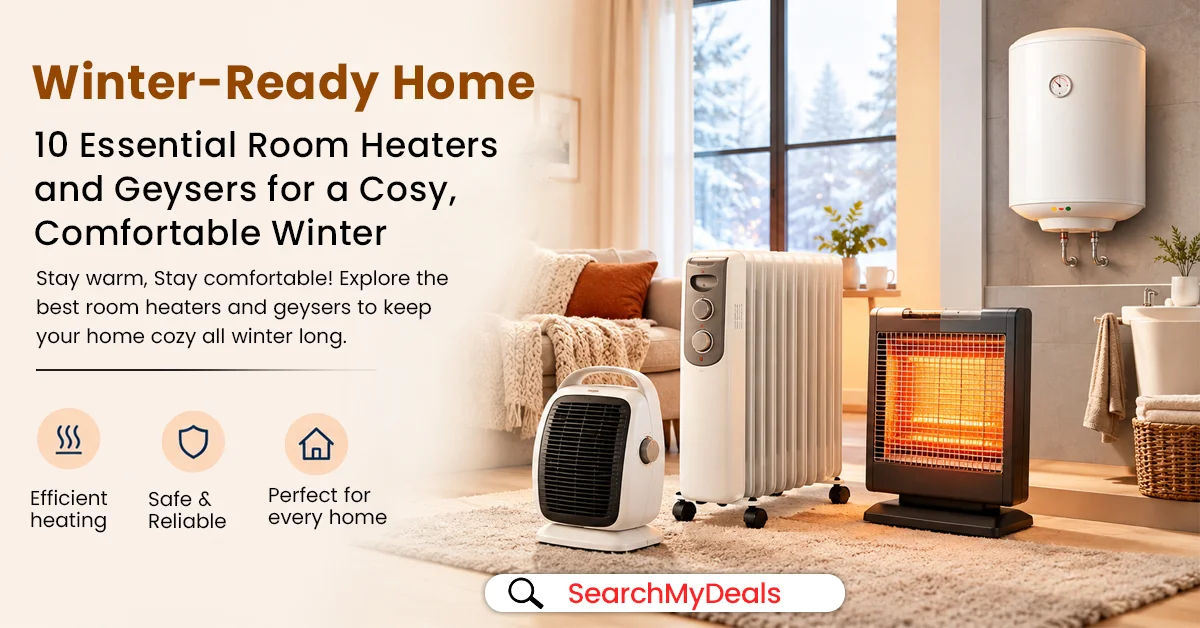
Winter mornings can make getting out of bed difficult, while cold water can turn a quick shower into an uncomfortable start to the day. The right winter home appliances can make everyday routines easier—but choosing them requires more than comparing prices or picking the first product labelled as a bestseller.
A room heater should suit the space you want to warm, how long you plan to use it and the safety features you need. A geyser should match your household’s hot-water demand, bathroom setup and available electrical connection. This guide covers 10 room heater and water-heater options to consider, along with practical advice to help you shortlist products and compare room heater and geyser deals online.
1. Five Room Heaters to Consider for Winter
The best room heater for your home depends on the size of the room, how quickly you want warmth and whether you need occasional or extended heating. These five options cover different household requirements.
1. Compact fan heater for a small room
A compact fan heater circulates warm air and can be useful when you want quick warmth in a study, home office or small bedroom. Its compact design is convenient when storage space is limited, and many models offer more than one heat setting.
What to check: Wattage, thermostat control, overheat protection, tip-over protection where applicable, cord length and whether the unit is suitable for your room. Fan heaters can create operating noise, and their airflow should never be blocked.
Best suited for: Short periods of heating in a small, occupied room.

2. Radiant heater for personal warmth
Radiant heaters warm nearby people and objects directly rather than relying only on circulating warm air. This can be useful when you sit in one place, such as while reading or working at a desk.
What to check: Protective grille, stable base, safety cut-off features and the manufacturer’s recommended clearance from furniture and fabrics. The heating element can become very hot, so placement matters.
Best suited for: Targeted warmth when you are seated in one area.

3. PTC or ceramic fan heater
PTC or ceramic heaters use a ceramic heating element and generally combine it with a fan to distribute warmth. Depending on the model, they may offer compact construction, adjustable settings and thermostat controls.
What to check: The actual wattage and heating modes, safety certifications, tip-over and overheat protection, noise level and ease of cleaning. Do not assume every ceramic heater has the same features.
Best suited for: Buyers who want a compact heater with controlled settings for everyday use.CHECK PRICES ON AMAZON
4. Oil-filled radiator for longer heating sessions
An oil-filled radiator heats internal oil and transfers warmth through its metal fins. It typically takes longer to warm up than a fan heater, but it does not rely on a fan to circulate heated air. Larger models may be more suitable for longer heating sessions in rooms where space is available.
What to check: Number of fins, power settings, thermostat, wheels or handles, dimensions and safety controls. An oil-filled radiator is usually heavier and occupies more floor space than a compact heater.
Best suited for: Bedrooms or living areas where longer periods of heating are expected.

5. Adjustable convection heater
A convection heater warms the surrounding air, which then circulates through the room. Depending on its design, it may be suitable for maintaining a more even room temperature rather than directing heat at one person.
What to check: Recommended room size, thermostat, heat settings, safety cut-offs and clearance requirements. Convection heating may feel slower than a fan-assisted model, so consider how quickly you need the room to warm up.
Best suited for: Buyers who prefer room-wide warmth and have sufficient space for the appliance.

2. Five Geyser and Water-Heater Options for Different Homes
Choosing a geyser is primarily about hot-water demand, not simply selecting the largest capacity available. Instant and storage water heaters work differently, so consider your routine before purchasing.
6. 3-litre instant water heater for limited hot-water needs
A small instant water heater may suit a kitchen sink or another point where hot water is needed in relatively small quantities. Its compact capacity can be useful where wall space is limited.
What to check: Whether the model is designed for your intended use, its power rating, flow requirements, pressure compatibility and installation instructions. A small instant unit may not meet the demands of a long shower or several users in succession.
Best suited for: Limited hot-water use at a suitable kitchen or utility point.

7. 5-litre instant water heater for compact bathrooms or kitchens
A 5-litre model can be worth considering when you want a compact water-heating solution. However, capacity alone does not determine performance: the heating element, water flow, inlet temperature and electrical supply also matter.
What to check: Whether it is an instant or small-storage model, the intended application, safety devices, pressure rating and professional installation requirements.
Best suited for: Smaller hot-water requirements, provided the product is suitable for the specific fixture and use.

8. 10-litre storage geyser for moderate demand
A 10-litre storage water heater stores heated water for use when required. It may suit a smaller household or a bathroom with moderate hot-water demand, depending on bathing habits and local winter temperatures.
What to check: The energy label, rated power, tank warranty, safety features, dimensions and whether the stored capacity is sufficient for your household. A smaller tank may need time to reheat between uses.
Best suited for: Households with moderate hot-water requirements and limited installation space.

9. 15-litre storage geyser for everyday family use
A 15-litre storage geyser is a common capacity to compare for household bathing needs. Whether it is sufficient depends on the number of users, shower duration, water temperature preferences and whether people need hot water one after another.
What to check: The BEE star label where applicable, standing heat-loss information if available, tank and element warranty, pressure compatibility and installation requirements. Also check whether your bathroom’s wiring and circuit can support the unit.
Best suited for: Households that need a stored supply of hot water for regular bathing.

10. 25-litre storage geyser for higher hot-water demand
A larger storage geyser can be useful when several family members need hot water or bathing routines require a bigger reserve. It also needs more wall space and may have a different installation and operating cost from a smaller unit.
What to check: Available installation space, mounting requirements, water pressure, rated power, energy label and the time required to heat the tank. Bigger capacity is not automatically better if your household uses only a small amount of hot water.
Best suited for: Families with higher hot-water demand, where the plumbing, mounting surface and electrical supply are appropriate.

3. Room Heater Buying Guide: What Matters Beyond Price?
When comparing room heaters for winter, consider the following factors before choosing a model:
Room size and heating style: A compact fan heater may work for brief use in a small room, while a larger room or longer heating session may call for a different type of heater.
Power consumption: Check the appliance’s rated wattage. For a simple estimate, a 2,000-watt heater running for one hour at full power uses 2 kWh. Actual consumption depends on the selected setting and operating cycle.
Controls and protection: Look for useful features such as a thermostat, overheat protection and tip-over cut-off where appropriate. Confirm the exact features on the product listing and manual.
Noise and placement: Fan-assisted heaters can be noisier than radiator-style models. Make sure the appliance can be positioned safely without blocking walkways.
Total value: Compare warranty, service availability, safety features and expected usage—not just the initial price.
For safer use, place a portable heater on a stable, level surface, keep it at least three feet (about one metre) from combustible materials, plug it directly into a suitable wall outlet and switch it off when leaving the room or going to sleep. Never cover it or use it to dry clothes. Follow the product manual and local electrical-safety guidance.
4. Instant Water Heater vs Storage Geyser: Which Should You Choose?
An instant water heater heats water as it flows through the unit, while a storage geyser heats and holds a quantity of water in a tank. Neither option is right for every home.
| Factor | Instant water heater | Storage geyser |
|---|---|---|
| Hot-water supply | Heats water on demand, within the model’s capacity | Keeps a tank of heated water ready for use |
| Space | Often compact | Requires room for a tank |
| Typical use | Sinks and limited hot-water needs, depending on the model | Bathing and household demand, depending on capacity |
| Main consideration | Flow rate, power rating and electrical requirements | Capacity, reheating time and heat loss |
| Before buying | Confirm intended use and water-pressure compatibility | Match tank size to the number of users and their routine |
For either type, do not assume that a smaller unit will automatically cost less to operate in every situation. Compare the rated power, expected usage, energy label where applicable and installation requirements. The Bureau of Energy Efficiency (BEE) lists stationary storage electric water heaters among appliances covered by its standards and labelling programme; check the current label and applicable requirements for the exact model.
How to choose a geyser for your family
Start with the number of people using hot water, the time between consecutive uses and the type of bathing fixtures installed. A household where everyone showers in quick succession may need a different capacity from a home where hot-water use is spread throughout the day. Ask a qualified installer to confirm the required electrical circuit, earthing, pressure compatibility and mounting arrangement before installation.
Frequently Asked Questions
1. Which room heater is suitable for a small room in India?
A compact fan or ceramic heater may suit short periods of heating in a small room. Check the room-size recommendation, wattage and safety features, and maintain the required clearance from curtains, bedding and furniture.
2. Are room heaters energy-efficient?
Energy use depends on the heater’s wattage, operating time, heat setting and how it is controlled. For example, a 1,000-watt heater running for two hours at full power uses 2 kWh. A thermostat may reduce running time by cycling the heater, but actual consumption varies.
3. Is a 5-litre geyser enough for a family?
Not necessarily. A 5-litre unit may suit a limited hot-water application, but family bathing requirements depend on the model, flow rate, heating performance and usage pattern. Compare the intended application with your actual needs before buying.
4. What should I check before buying a geyser online?
Check the capacity, instant or storage type, energy label where applicable, safety features, tank and product warranty, installation terms, seller details and return policy. Confirm that the appliance is compatible with your water pressure and electrical connection.
Make winter shopping more practical with SearchMyDeals.com. Compare relevant room heaters, geysers and seasonal offers, review product details carefully, and choose an appliance that fits your home, routine and budget.
Affiliate disclosure: This article may contain affiliate links. We may earn a commission from qualifying purchases at no additional cost to you. Product availability, prices and offers may change; check the retailer’s listing before purchasing.


