


Bring the Cinema Home: 10 Premium Soundbars and Home Audio Systems for an Immersive Movie Night
- 23 Oct 2026
-
 By Shivanshu
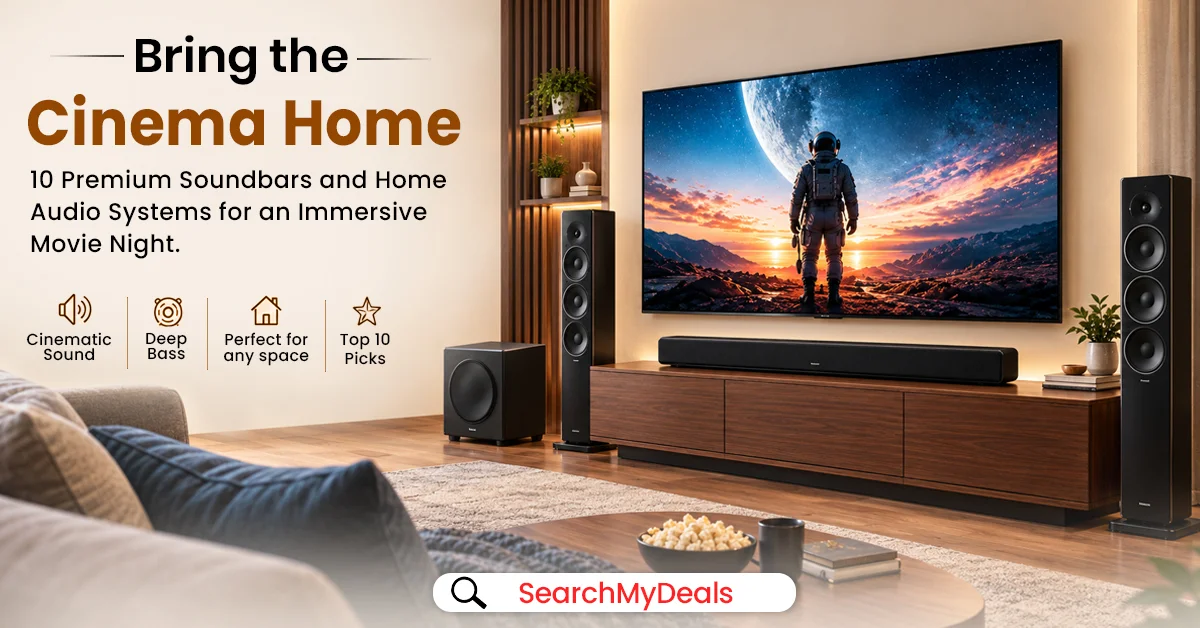
A gripping movie scene needs more than a good picture. Quiet dialogue, a dramatic soundtrack, footsteps approaching from behind and deep cinematic effects all contribute to the experience. Yet even a large television may have limited room for speakers capable of creating a wide, convincing soundstage. That is where premium home audio systems can make a difference.
The right setup depends on your room, viewing habits and budget. A compact soundbar can be a neat upgrade for a bedroom or apartment, while a system with separate rear speakers can create a more distinct surround experience in a living room. Dolby Atmos adds another dimension when the content and equipment support it.
This guide compares 10 soundbars and home theatre systems available in the supplied product list, explains the important audio terms and offers practical advice before you buy.
Soundbar vs 2.1 vs 5.1: What Is the Difference?
A soundbar combines several speaker drivers into one long enclosure, often paired with a separate subwoofer. It is generally easier to install than a multi-speaker system and can improve dialogue and overall sound compared with many built-in TV speakers.
A 2.1-channel system has left and right audio channels plus a subwoofer for low-frequency effects. It can add depth to action scenes and music, but it does not provide the same dedicated rear-channel arrangement as a conventional 5.1 setup.
A 3.1-channel system adds a centre channel to the left and right channels, usually helping dialogue stand out more clearly. Some models also include virtual surround processing.
A 5.1-channel system typically uses front left, centre and right speakers, two surround speakers and a subwoofer. Separate rear or surround speakers can provide more distinct placement of effects around the listening area, although the result depends on speaker positioning, room acoustics and the audio mix.
What Does Dolby Atmos Actually Do?
Dolby Atmos is an audio format designed to place sounds around and, in supported setups, above the listener. Some soundbars use upward-firing drivers to direct sound towards the ceiling; others create a sense of height using processing. Dedicated home theatre systems can use separate speakers to build a more distributed sound field.
The Dolby Atmos label alone does not guarantee the same experience across every product. You also need compatible content, suitable connections and a setup that supports the format. A soundbar with virtual Atmos processing is not identical to a system with physical height speakers.
10 Premium Soundbars and Home Audio Systems to Compare
1. Sony BRAVIA Theatre System 6 (HT-S60)
Best for: Buyers looking for a dedicated multi-speaker home theatre setup.
The Sony BRAVIA Theatre System 6 is listed as a 5.1-channel system with 1,000W total output and support for Dolby Atmos and DTS. Its multi-speaker arrangement makes it worth considering if your priority is a fuller surround presentation rather than a single soundbar.
Buying tip: Plan where the surround speakers and subwoofer will sit before purchasing. Check the exact package contents and room layout requirements.
2. JBL Cinema SB595 5.1 (3.1.2) Channel Soundbar
Best for: Movie fans who want Dolby Atmos support without arranging a full set of rear speakers.
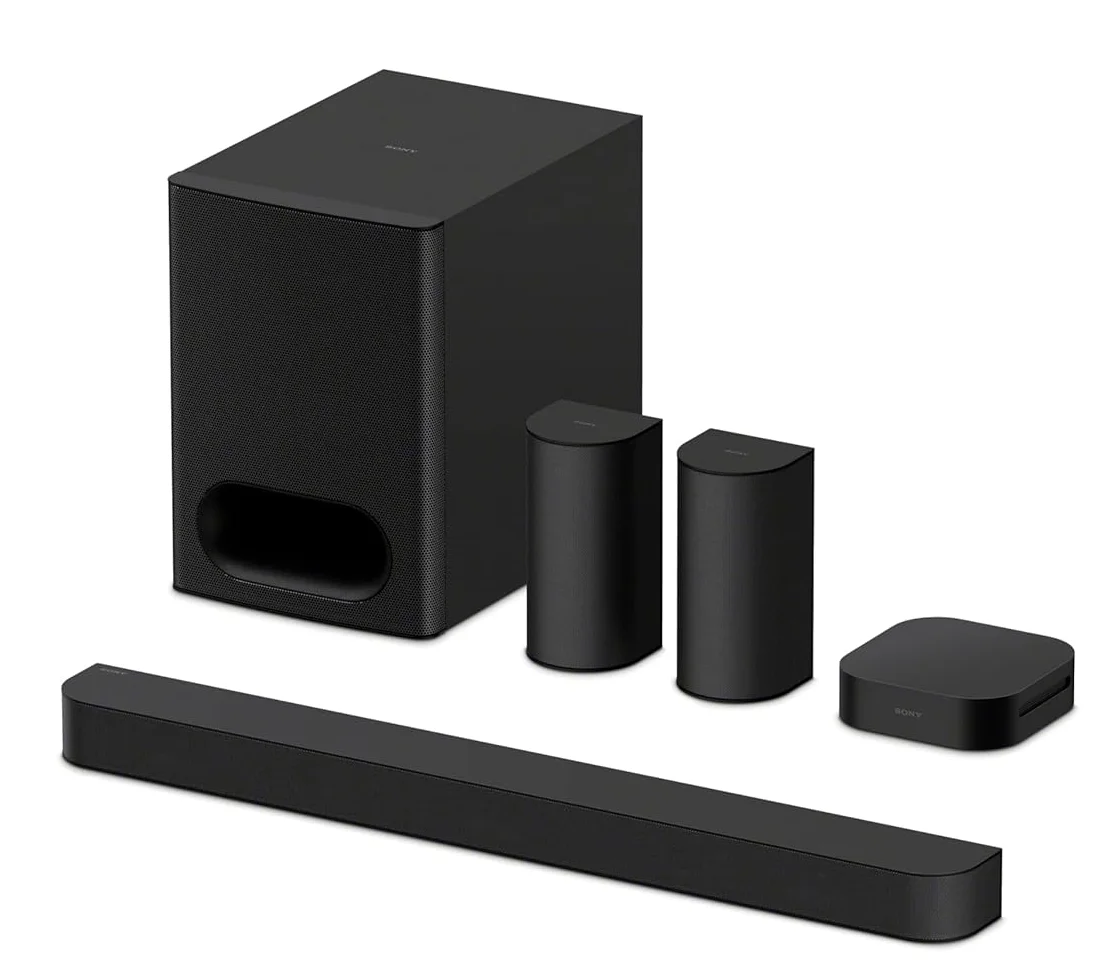
The JBL Cinema SB595 is listed with 440W output, a 3.1.2-channel configuration, a wireless subwoofer, HDMI eARC, Bluetooth and a dedicated centre channel. Its upward-firing drivers are intended to support a more immersive Atmos presentation, while the centre channel is useful for dialogue-focused viewing.
Buying tip: Your television should support a compatible audio connection for the intended experience. Check HDMI eARC compatibility and leave suitable space for the subwoofer.
3. Samsung 490W 5.1-Channel Soundbar with Centre Speaker
Best for: Households that want a multi-speaker setup with separate surround speakers.
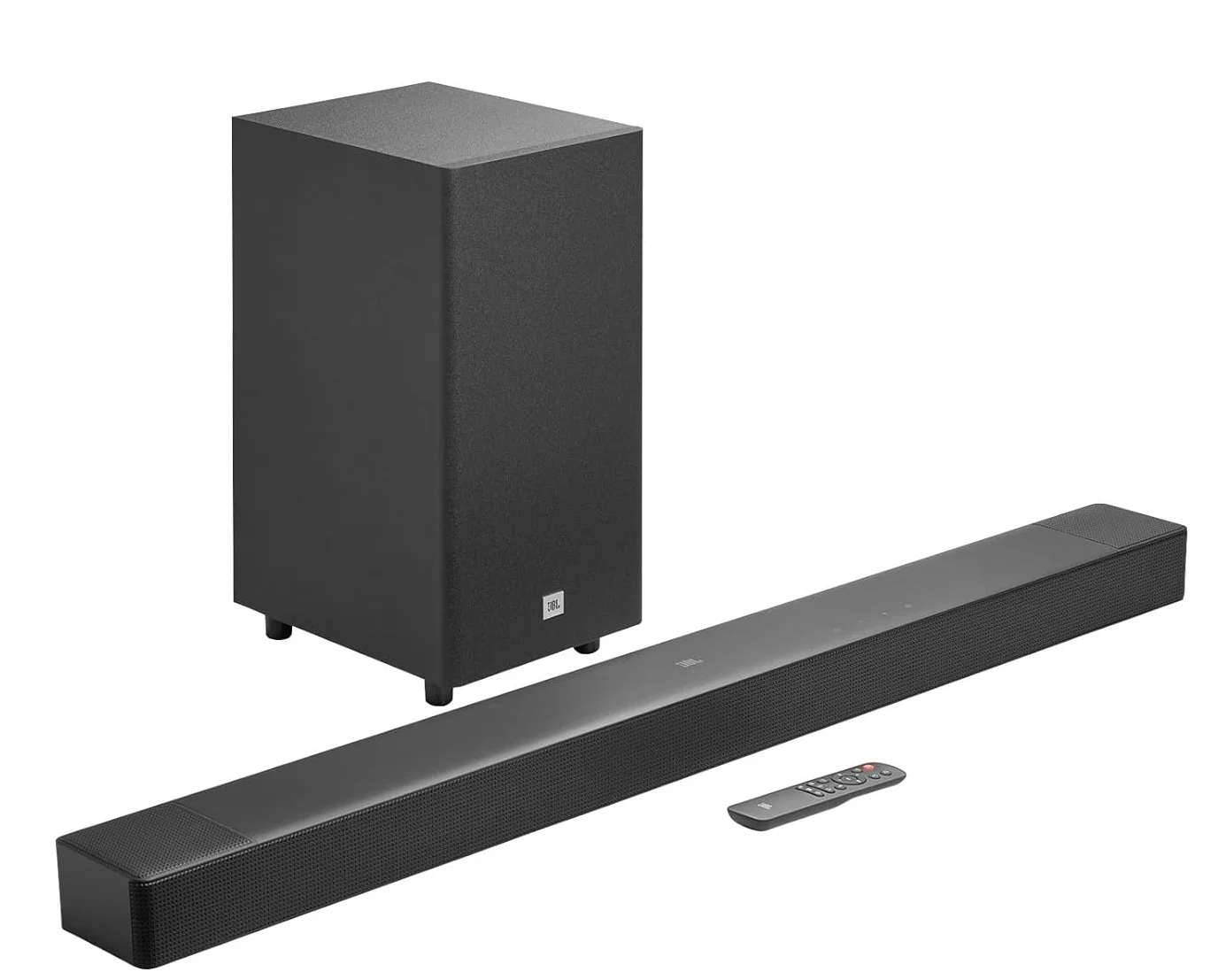
The supplied listing describes a 490W, 5.1-channel Samsung soundbar with a centre speaker, Dolby Audio, DTS Virtual, Q-Symphony and wireless rear speakers. This configuration may suit movie watching when you want separate surround speakers and clearer dialogue than a basic two-channel bar can offer.
Buying tip: Confirm the exact model code and whether the rear speakers are included in the package. Q-Symphony is designed for compatible Samsung televisions, so check your TV model before treating it as a deciding feature.
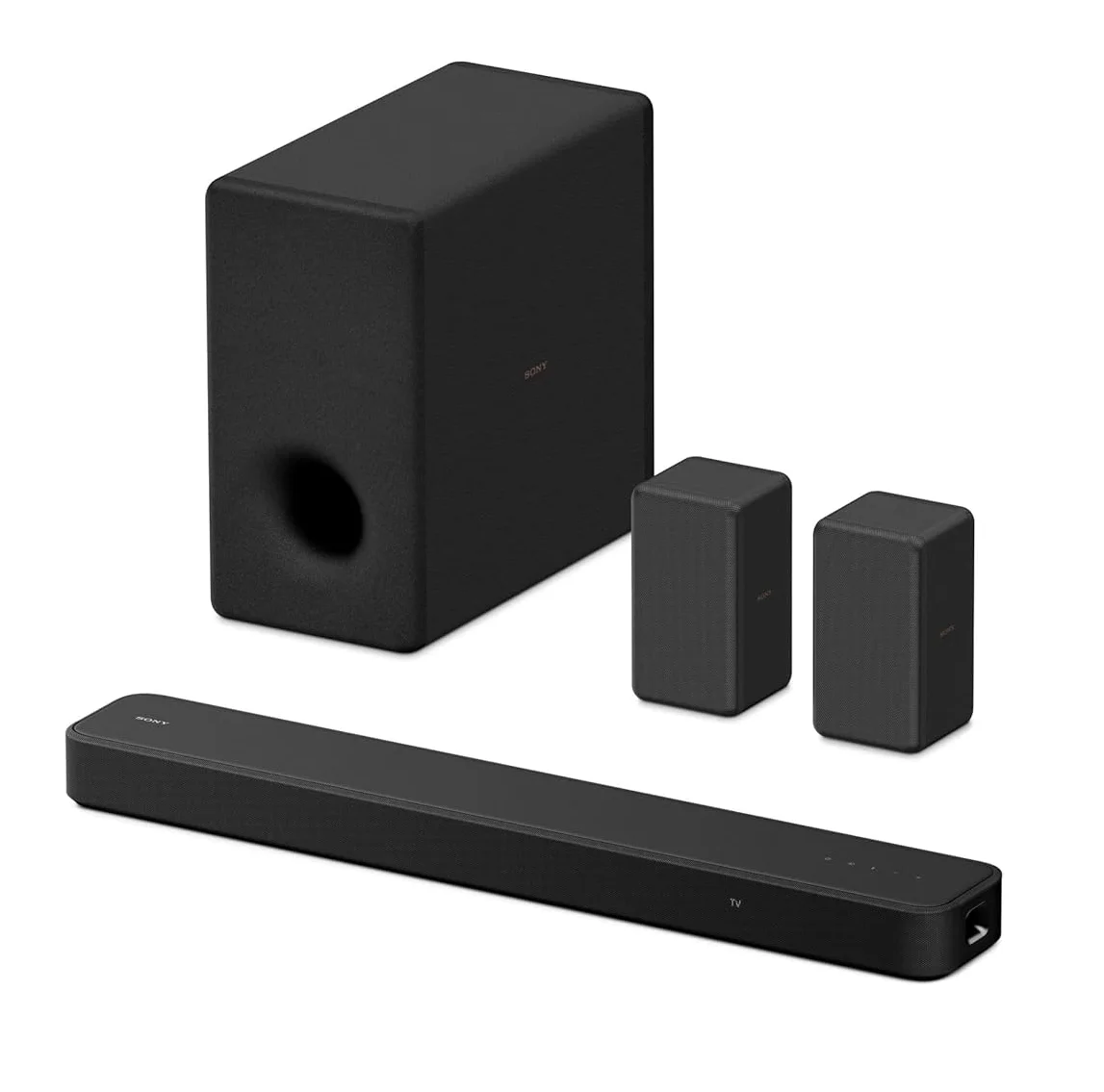
4. Sony HT-S2000 with SA-SW3 Subwoofer and SA-RS3S Rear Speakers
Best for: Buyers considering a compact soundbar setup that can be expanded.
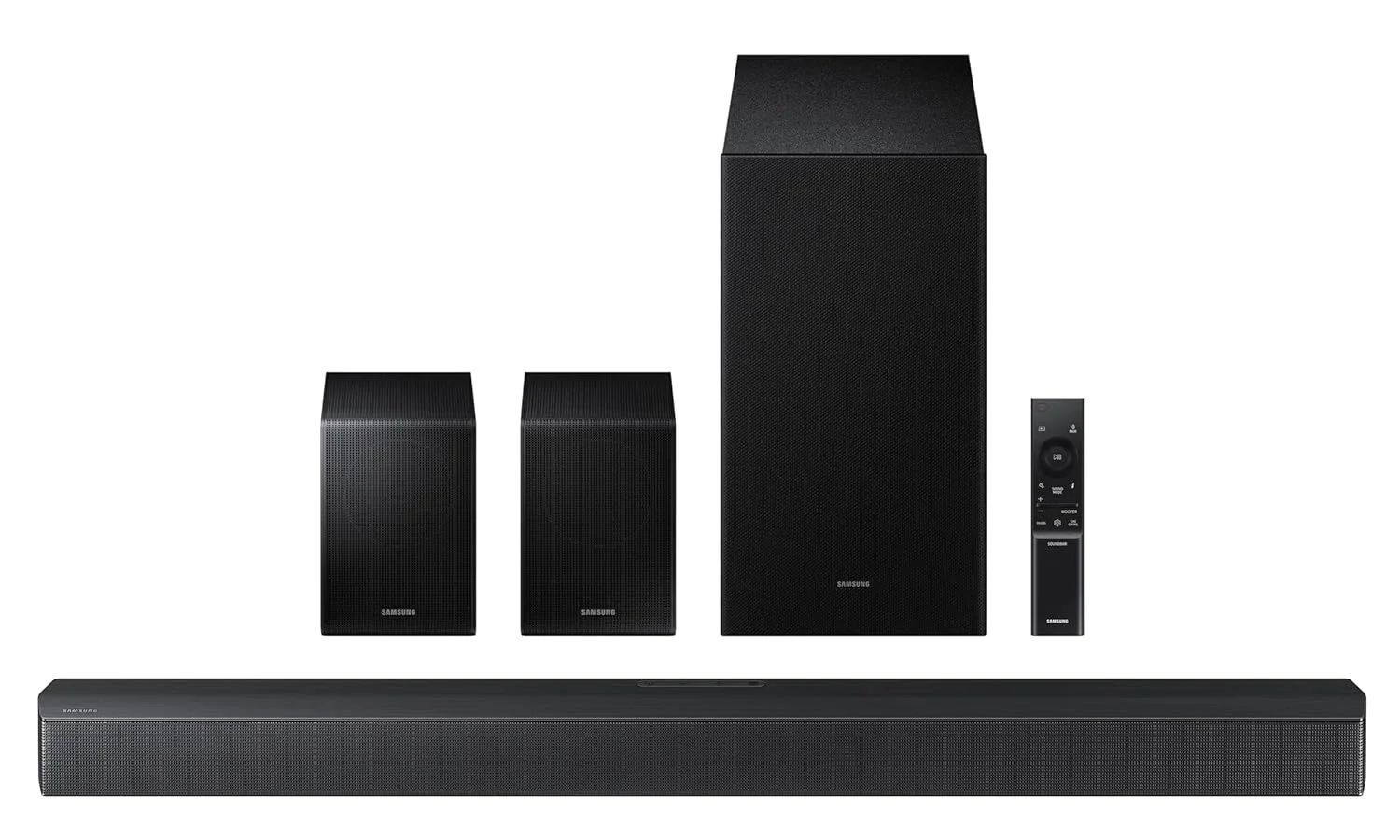
The supplied product title describes the Sony HT-S2000 3.1-channel Dolby Atmos soundbar alongside an SA-SW3 wireless subwoofer and SA-RS3S rear speakers. The soundbar provides a compact starting point, while compatible additional speakers can broaden the system's presentation.
Buying tip: Verify whether all three components are included in the exact Amazon listing or offered separately. Check compatibility and the combined cost before comparing this bundle with a complete 5.1-channel system.
5. Bose Smart Dolby Atmos Soundbar
Best for: Buyers who prefer a streamlined soundbar with smart features.
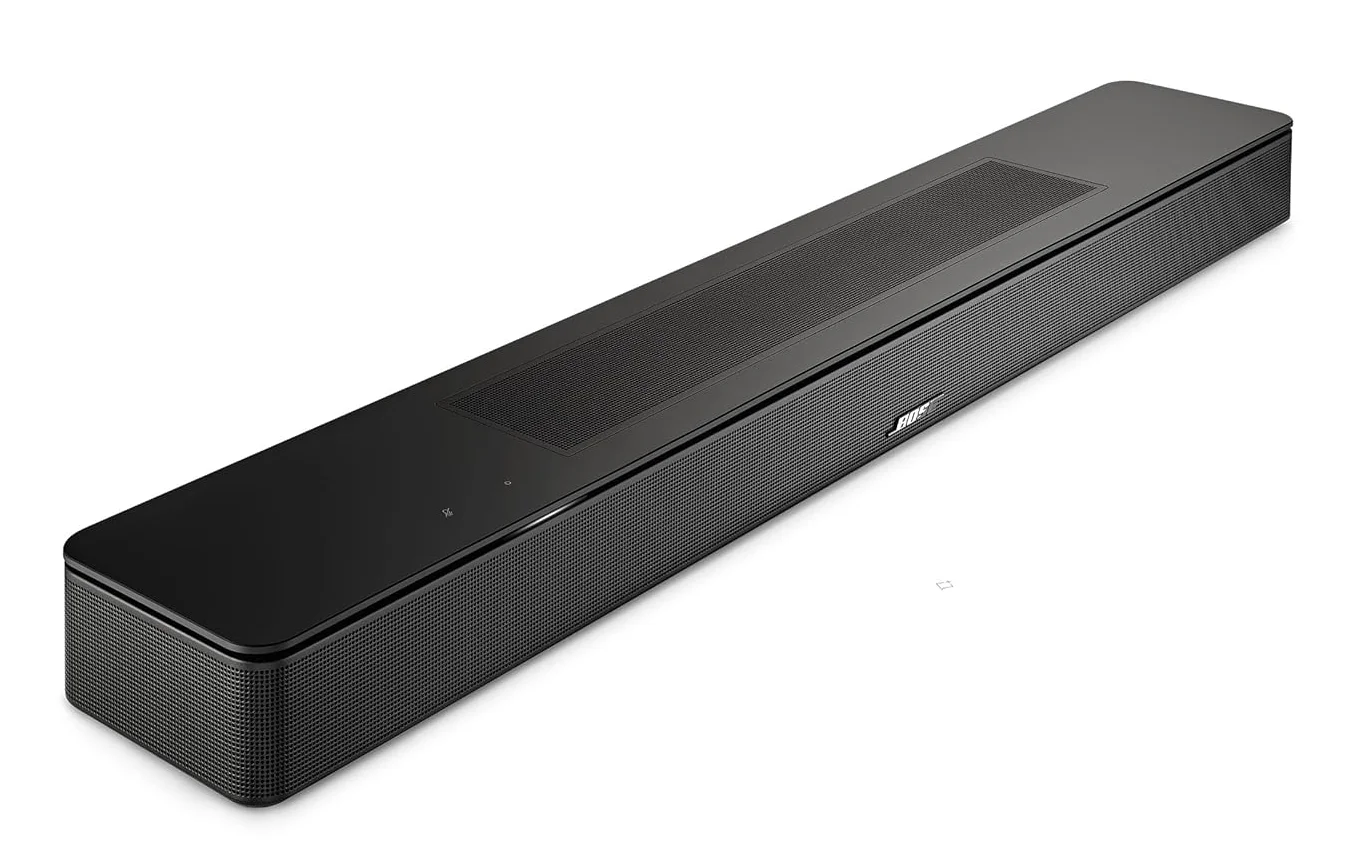
The supplied listing highlights Dolby Atmos, Bluetooth, voice control, built-in Amazon Alexa and Google Assistant capabilities. This type of soundbar may appeal to people who want to improve TV audio while also using the system for music and voice-assisted functions.
Buying tip: Confirm which voice-control functions are supported in your region and which services require an account or compatible device. If deep bass or physical rear-channel effects are important, check whether a separate subwoofer or surround speakers are included or available as add-ons.
6. Sonos Beam (Gen 2)
Best for: Compact living rooms where space and music streaming matter.
The Sonos Beam (Gen 2) is a compact soundbar with Dolby Atmos support and Amazon Alexa listed in the supplied title. Its smaller footprint can make it easier to place beneath a television, and the Sonos ecosystem may appeal to households that want to use the same system for TV and music.
Buying tip: Do not assume that a compact Atmos soundbar will reproduce the same physical surround effect as a system with separate rear speakers. Check supported connections, streaming features and the cost of any optional expansion components.

7. JBL Cinema SB190 Soundbar with Wireless Subwoofer
Best for: Buyers who want a simpler soundbar and subwoofer arrangement.
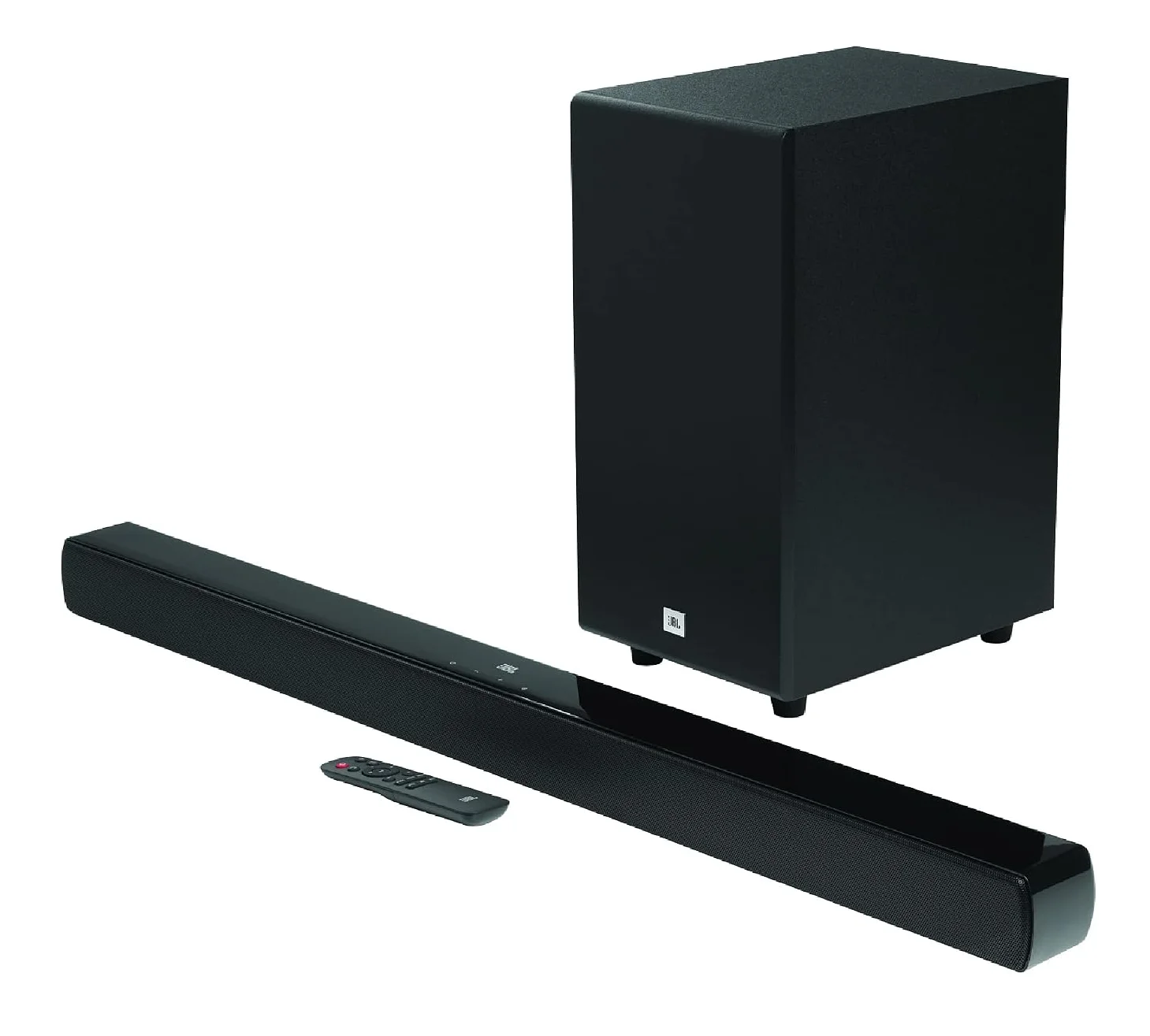
The supplied title describes a 2.1-channel soundbar with a wireless subwoofer, Dolby Atmos branding and a voice-clarity sound mode. JBL's product documentation identifies the SB190 as a 2.1-channel system with virtual Dolby Atmos processing and a wireless subwoofer.
Buying tip: Virtual Atmos is not the same as a system with dedicated height and rear speakers. Compare the available inputs and confirm the exact model on the supplied retailer page before ordering.
8. Sony HT-S20R Real 5.1-Channel Home Theatre System
Best for: Buyers who prioritise separate surround speakers.
The Sony HT-S20R is listed as a real 5.1-channel system with a subwoofer and compact rear speakers. A multi-speaker layout can make it easier to distinguish effects from different directions when a film's audio mix supports surround playback.
Buying tip: Separate speakers need suitable placement, and wired connections can affect where components can be installed. Check cable lengths, room layout and installation requirements before buying.

9. boAt Aavante Prime 5.1 5000D
Best for: Buyers looking for a multi-speaker home audio system with several connection options.
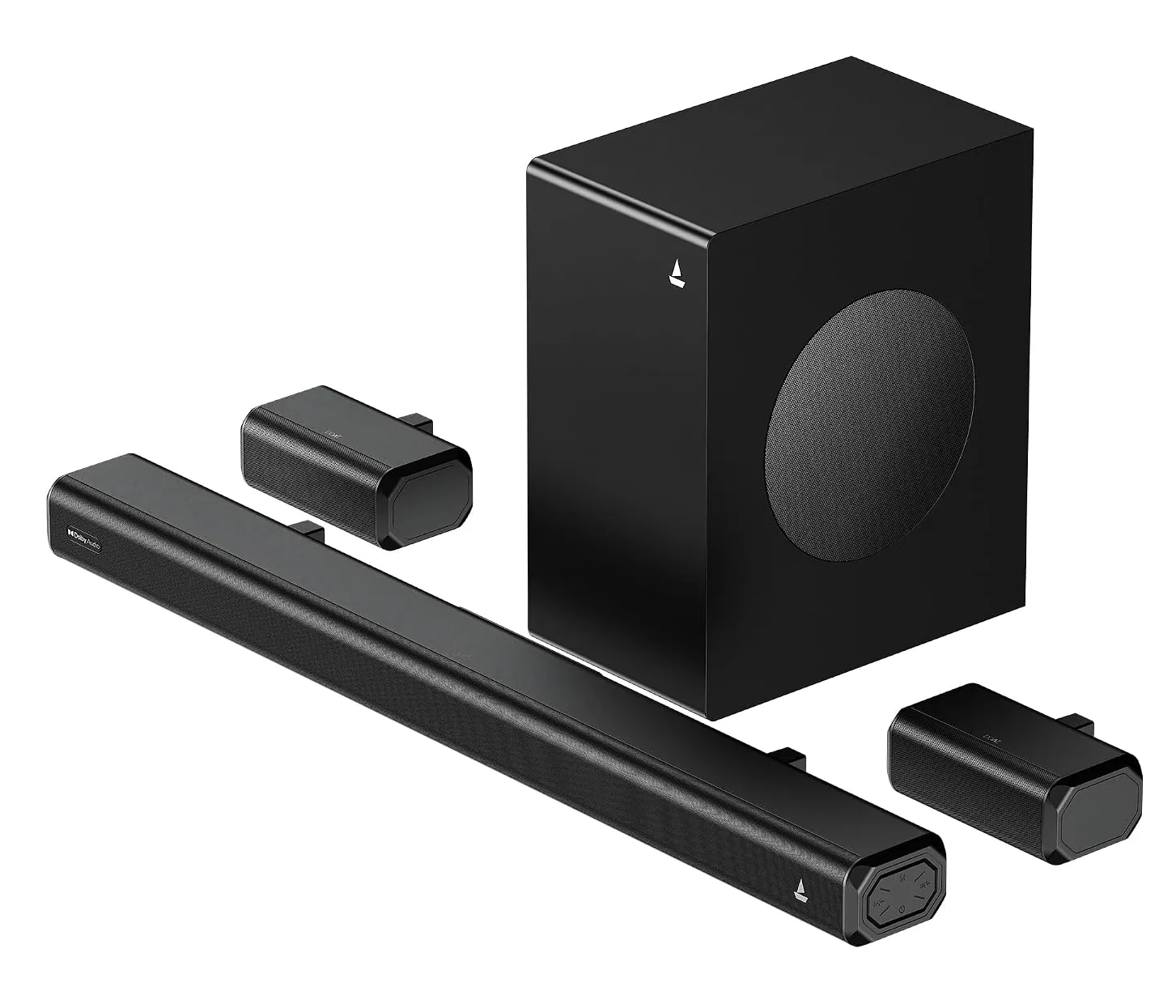
The supplied listing describes a 500W, 5.1-channel system with Dolby Audio, multiple ports and EQ modes. boAt's support documentation lists HDMI ARC, Bluetooth, USB, AUX and optical connectivity, along with a subwoofer and satellite speakers.
Buying tip: Compare the actual included speaker arrangement and the available connections with your TV and streaming devices. Check the placement and wiring requirements for the satellite speakers before deciding.
10. Samsung 370W 3.1-Channel Soundbar
Best for: Buyers who want a centre channel for dialogue without a full rear-speaker setup.
The supplied listing describes a 370W Samsung soundbar with a 3.1-channel configuration, Dolby Audio, DTS Virtual, Q-Symphony, a centre speaker and HDMI ARC. A centre channel can be useful when dialogue clarity is a priority, while the soundbar format keeps the setup relatively simple.
Buying tip: Confirm the exact model number and compatibility requirements for Q-Symphony. HDMI ARC can simplify TV audio connections, but your TV and soundbar must support the functions you intend to use.

Comparison Table: Which Setup Fits Your Room?
| Product | Listed configuration | Potential room fit | Connectivity/features to check | Budget guidance |
|---|---|---|---|---|
| Sony BRAVIA Theatre System 6 | 5.1ch, 1,000W | Medium living room or dedicated movie space | Dolby Atmos, DTS; confirm TV connection | Check current listing |
| JBL Cinema SB595 | 3.1.2ch, 440W | Small-to-medium living room | Dolby Atmos, HDMI eARC, Bluetooth | Check current listing |
| Samsung 490W soundbar | 5.1ch | Medium living room | Q-Symphony, rear-speaker package, TV compatibility | Check current listing |
| Sony HT-S2000 bundle | 3.1ch bar plus listed add-ons | Compact-to-medium room, depending on package | Verify included subwoofer and rear speakers | Confirm bundle price |
| Bose Smart Soundbar | Soundbar; exact configuration to verify | Compact living room or TV area | Voice features, Bluetooth, TV connection | Check current listing |
| Sonos Beam (Gen 2) | Compact Atmos soundbar | Bedroom or small-to-medium room | HDMI connection, streaming and voice features | Check current listing |
| JBL Cinema SB190 | 2.1ch | Bedroom or smaller living room | Virtual Atmos, wireless subwoofer, inputs | Check current listing |
| Sony HT-S20R | Real 5.1ch | Living room with space for rear speakers | Speaker cables and TV connection | Check current listing |
| boAt Aavante Prime 5.1 5000D | 5.1ch, 500W | Living room with room for satellites | HDMI ARC, Bluetooth, USB, AUX, optical | Check current listing |
| Samsung 370W soundbar | 3.1ch | Bedroom or compact living room | HDMI ARC, Q-Symphony compatibility | Check current listing |
Room suitability is a general guide, not a manufacturer rating. Exact prices, package contents and availability can change; check the live listing before purchase. No indicative rupee prices are shown because current verified Amazon prices were not supplied for all products.
What to Check Before Buying a Premium Home Audio System
1. Match the system to the room. A compact soundbar can suit a bedroom or smaller living room. Separate surround speakers may be more rewarding in a space where you can position them correctly. A large output rating alone does not guarantee better sound.
2. Check HDMI ARC and eARC. HDMI ARC allows compatible televisions to send audio to a soundbar over HDMI. eARC supports greater audio bandwidth and can be important for certain high-quality formats. Check the TV's ports and audio settings, as well as the soundbar's supported formats.
3. Understand the subwoofer. A subwoofer handles low-frequency effects such as rumbles and soundtrack bass. A wireless subwoofer reduces the signal cable running to the main unit, but it still needs power and a suitable location.
4. Consider rear-speaker placement. A true 5.1-channel setup uses surround speakers to add directional effects. Before buying, decide whether you can place the speakers beside or behind the listening position and route their cables safely.
5. Look beyond wattage. Total power ratings are not directly comparable across brands or product lines. Speaker configuration, room acoustics, sound processing, dialogue clarity and supported audio formats also affect the result.
6. Compare the full cost. Include any optional subwoofer, rear speakers, mounts or cables needed to achieve the setup you want. Compare the live price, warranty, seller information and return terms rather than relying on an advertised saving alone.
FAQs
1. Is Dolby Atmos worth it for watching movies at home?
It can be worthwhile if you regularly watch compatible content and your sound system and connection support Atmos playback. The effect varies by system: some use upward-firing drivers, while others simulate height through processing.
2. Is a 5.1-channel system better than a soundbar?
A 5.1-channel system with separate surround speakers can offer more distinct directional effects. A soundbar is usually simpler to install and may suit smaller rooms. The best choice depends on your space, budget and willingness to manage extra speakers.
3. Do I need HDMI eARC for a soundbar?
Not for every soundbar. HDMI ARC, optical or other supported connections may be sufficient for some setups. eARC is useful when you need its greater audio bandwidth and supported formats. Check both devices' specifications before purchasing.
4. Is a wireless subwoofer completely cable-free?
No. “Wireless” generally means the audio signal is sent without a cable from the main unit, but the subwoofer still needs a power connection. Rear speakers may also need power or wired connections, depending on the system.
Bring a More Immersive Sound Experience Home
You do not need the largest system to enjoy films more. Choose the configuration that fits your room, check TV compatibility and prioritise the features you will use most. Explore the listed models and compare current offers on SearchMyDeals.com before choosing your next home audio upgrade.
Affiliate disclosure: This article may contain affiliate links. We may earn a commission from qualifying purchases at no additional cost to you.


